What Are the Types of Plastic? A Guide to Identifying Plastics and Their Contamination Risks
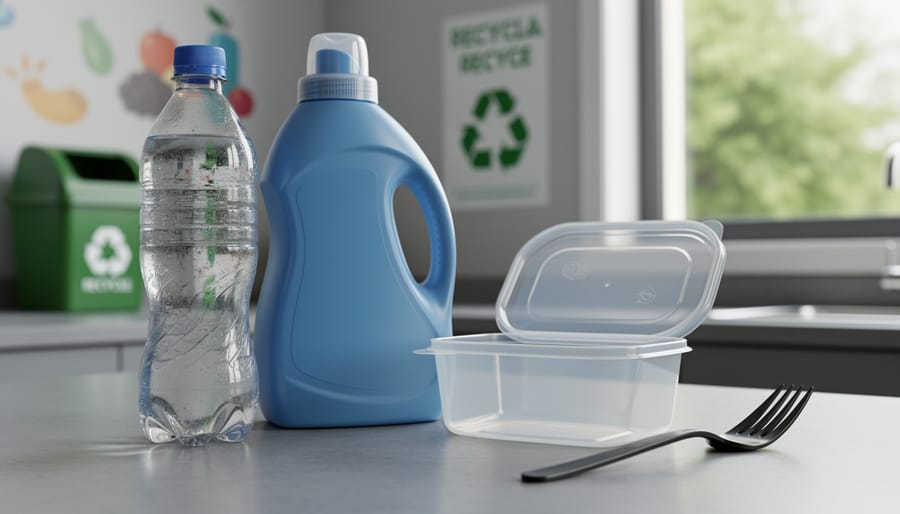
Every plastic bottle, container, and wrapper you pick up carries a small number stamped into its surface, typically inside a triangle of chasing arrows. That number, ranging from 1 to 7, tells you exactly what type of plastic resin the item is made from and, crucially, whether it can be safely recycled in your community. Understanding these identification codes isn’t just useful trivia. It’s the difference between a recyclable going to the right facility and becoming a contaminant that ruins entire batches of recovered material.
Here in Michigan, where our recycling streams feed back into manufacturing and where the health of the Great Lakes depends on reducing plastic waste, knowing your plastics matters more than ever. When a greasy pizza box contaminates paper recycling or a black plastic fork slips into the PETE stream, the consequences ripple through our local waste management systems. These types of contamination cost Michigan recyclers thousands of dollars annually and undermine the circular economy we’re working to build.
This guide will walk you through the plastic numbering system, teach you to identify each type at a glance, and show you which materials your Michigan community actually accepts. You’ll learn why some plastics are recycling stars while others are destined for landfills, and how proper sorting protects both our recycling infrastructure and our waterways. Whether you’re standing in your kitchen sorting last night’s takeout containers or shopping for products with better end-of-life options, you’ll have the knowledge to make choices that genuinely reduce plastic pollution.
What Plastic Identification Means
Plastic identification is the practice of recognizing different plastic types so they can be handled, recycled, or disposed of properly. At its core, this system relies on small symbols you’ve probably noticed on bottles, containers, and packaging, a triangle of arrows with a number inside. Those numbers range from 1 to 7, and each represents a specific plastic resin with distinct chemical properties and recycling capabilities.
The Society of Plastics Industry introduced the resin identification code system in 1988 to create a universal language for sorting plastics. Before RIC codes, recycling facilities struggled to separate different plastics efficiently, leading to contaminated batches that couldn’t be reprocessed. The numbered symbols solved this problem by giving manufacturers, consumers, and recyclers a quick visual reference. When you sort plastics correctly at home, you’re reducing contamination that would otherwise ruin entire loads of recyclable material.
- Resin Identification Code (RIC)
- The numbered symbol (1-7) inside a triangle of arrows that identifies which plastic polymer a product is made from. This code determines whether and how the item can be recycled.
- Polymer
- A large molecule made of repeating chemical units. Different plastic types are different polymers with unique properties.
- Thermoplastic
- A type of plastic that softens when heated and hardens when cooled, allowing it to be melted down and reformed during recycling. Most common plastics are thermoplastics.
- Contamination
- When incompatible materials mix together in recycling streams, reducing the quality or making the batch unrecyclable. Even one wrong plastic type can contaminate thousands of pounds of material.
- Single-Stream Recycling
- A collection system where residents place all recyclables in one bin, then facilities sort them mechanically. This convenience increases participation but also raises contamination risks.
In Michigan, proper plastic identification directly impacts local recycling success. Most Michigan communities use single-stream recycling, where your mixed recyclables get sorted at facilities using optical scanners and manual labor. When plastics are misidentified or unmarked items slip through, they contaminate otherwise clean material streams. Detroit’s Materials Recovery Facility processes over 40,000 tons annually, and contamination remains their biggest operational challenge. Understanding RIC codes helps you become part of the solution rather than contributing to the problem.
How Plastic Identification Works
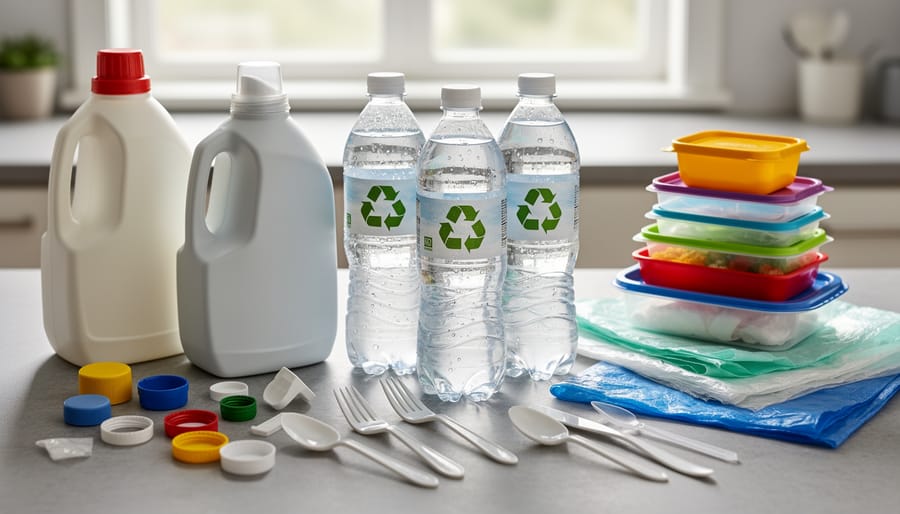
Identifying plastic starts with three straightforward methods: checking the resin identification code, examining physical characteristics, and understanding where manufacturers place these markers on everyday items.
The RIC appears as a triangle of three chasing arrows with a number from 1 to 7 inside. You’ll typically find this symbol molded into the bottom or side of containers, stamped on bottle caps, or printed on flexible packaging near seams. Manufacturers place codes where they won’t interfere with labeling but remain visible during sorting. On bottles, flip them over and look at the base. On bags and wrappers, check corners or the bottom seal. Some products skip the triangle and print just the number with surrounding text like “HDPE” or “PP.”
When codes are worn off or missing, physical properties reveal what you’re handling. Clear, rigid bottles that crinkle when squeezed are usually PET. Opaque containers with a waxy feel and slight flexibility indicate HDPE. Stiff, brittle plastic that turns white when bent is likely polystyrene.
Here are simple identification methods you can use at home:
- Check for the triangle symbol with a number on the bottom, sides, or near seams of containers
- Float test: fill a container with water, HDPE and PP float; PET, PVC, and PS sink
- Flexibility test: squeeze the item, LDPE film is very stretchy, while PS snaps easily
- Sound test: tap rigid plastics, PS produces a hollow sound, while PET sounds sharper
- Burn test (outdoor use only with proper ventilation): different plastics produce distinct smoke colors and smells, but this method requires caution and should be a last resort
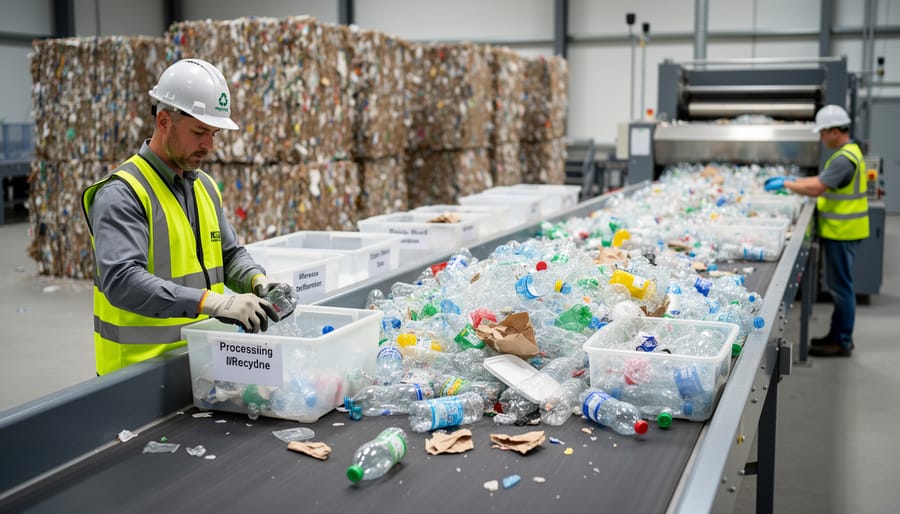
Michigan recycling facilities combine these manual techniques with sophisticated technology. Optical sorters use near-infrared spectroscopy to identify plastic types as items speed past on conveyor belts at rates exceeding 200 pieces per minute. These machines detect the unique light signature each polymer reflects, then trigger air jets that blast sorted plastics into designated bins.
Detroit’s Materials Recovery Facility supplements optical sorting with manual quality control stations where workers catch misidentified items and remove contamination. Smaller Michigan operations in cities like Grand Rapids and Kalamazoo rely more heavily on trained staff who visually sort plastics by symbol and physical properties, making resident education about proper identification even more critical for these facilities.
The Seven Main Types of Plastic
PET/PETE (#1), Polyethylene Terephthalate
PET plastic makes up most of the clear bottles you grab from store shelves, water bottles, soda containers, salad trays, and peanut butter jars. Look for the #1 inside the recycling triangle, usually stamped on the bottom. Michigan accepts PET widely in curbside recycling because it’s valuable and relatively easy to process into new products like clothing fibers and carpet.
The contamination concerns center on two issues. First, PET sheds microplastic particles when bottles are reused or exposed to heat, particularly during dishwashing or sitting in hot cars. Second, antimony trioxide, used as a catalyst during manufacturing, can leach into beverages when bottles sit for extended periods or face temperature fluctuations. Studies show antimony levels increase the longer liquid stays stored.
Despite these risks, PET remains one of the safest single-use options and has Michigan’s highest recycling rate among plastics. Rinse containers before recycling, avoid reusing bottles multiple times, and never heat PET in microwaves.
HDPE (#2), High-Density Polyethylene
HDPE carries the #2 symbol and forms some of the most commonly recycled plastics in Michigan. You’ll recognize it in milk jugs, laundry detergent bottles, shampoo containers, and those crinkly grocery bags. The material has a slightly waxy feel and makes a hollow sound when tapped.
This plastic type offers the best news for recyclers. HDPE maintains high recyclability rates across Michigan facilities, and most curbside programs accept #2 containers without hesitation. The material’s dense molecular structure makes it resistant to chemical leaching, giving it a relatively low contamination profile compared to other plastics. It doesn’t readily release harmful compounds into contents or surrounding environments.
In the Great Lakes context, HDPE breaks down more slowly than lighter plastics, reducing immediate microplastic contribution. When it does fragment, the resulting particles are typically larger and easier to capture during water treatment. Detroit and Grand Rapids recycling centers report that properly sorted HDPE fetches better market prices than mixed plastics, making it economically viable to process.
PVC (#3), Polyvinyl Chloride
PVC sits in the middle of the numbering system but ranks among the most problematic plastics for environmental health. You’ll recognize the #3 symbol on rigid items like plumbing pipes, window frames, and vinyl siding, though it rarely appears in food packaging anymore due to safety concerns. The material feels stiff and sometimes has a slight chemical smell when new.
What makes PVC especially troubling is its additive cocktail. Manufacturers blend in phthalates to make it flexible and stabilizers to prevent breakdown, but these chemicals don’t bond permanently to the plastic. They leach into surrounding environments, particularly concerning when PVC enters water systems. When burned or broken down, PVC releases dioxins, persistent toxins that accumulate in organisms and move up food chains. Michigan’s older infrastructure contains extensive PVC piping that gradually degrades and sheds microplastics into our water supply.
Recycling facilities across the state generally reject PVC because it contaminates other plastic batches and damages processing equipment. If you’re renovating, consider PEX or copper alternatives for plumbing and look for vinyl-free options in building materials. When disposing of PVC products, check if your municipality offers special collection events rather than tossing them in standard recycling bins.
LDPE (#4), Low-Density Polyethylene
Low-density polyethylene shows up everywhere as plastic grocery bags, bread bags, produce bags, and the squeezable bottles holding honey, mustard, and condiments. You’ll also find it in dry cleaning bags, newspaper sleeves, and the stretchy film wrapping toilet paper multipacks. LDPE feels soft and flexible, it crinkles when you squeeze it and often has a waxy texture.
Most curbside recycling programs in Michigan don’t accept LDPE bags and film because they jam sorting machinery at facilities. Instead, many grocery stores maintain drop-off bins specifically for clean plastic bags and film. When LDPE does contaminate recycling streams, it tangles around equipment and shuts down processing lines for hours.
The bigger environmental problem happens outdoors. LDPE bags blow away easily, ending up in rivers and Lake Michigan where they persist for decades while slowly fragmenting into microplastics. These films trap small fish and waterfowl, and the microplastics eventually enter the food chain.
PP (#5), Polypropylene
Polypropylene ranks as one of the more recyclable plastics you’ll encounter daily. Look for the #5 inside Michigan recycling triangles on yogurt containers, medicine bottles, bottle caps, and reusable food storage. PP’s high melting point (320°F) makes it dishwasher-safe and ideal for hot-fill products like soup containers.
Michigan recycling programs increasingly accept PP. While historically limited to specialized drop-off sites, curbside programs in Ann Arbor, Grand Rapids, and metro Detroit now take rigid PP containers. Check locally, some facilities still exclude PP caps and flexible items like straws.
PP releases fewer additives than lower-numbered plastics but isn’t contamination-free. Studies detect oligomers (plastic fragments) migrating into fatty foods stored in PP containers, especially when heated. In Great Lakes sediment samples, PP microplastics persist for decades, breaking into particles that absorb waterborne pollutants.
The good news? PP doesn’t contain phthalates or BPA, giving it a moderate contamination profile compared to PVC or polystyrene.
PS (#6), Polystyrene
Polystyrene earns its notorious reputation through foam coffee cups, clamshell takeout containers, disposable plates, and those ubiquitous packing peanuts that scatter across your floor. You’ll recognize it by its #6 symbol, lightweight feel, and tendency to break into annoying white fragments.
The contamination profile raises serious concerns. Styrene, the building block of polystyrene, leaches into hot foods and liquids, especially problematic since we use PS for coffee cups and soup bowls. The International Agency for Research on Cancer classifies styrene as a possible human carcinogen. When polystyrene reaches Michigan’s waterways, it persists for decades while fragmenting into microplastics that fish mistake for food.
Recycling acceptance remains abysmal. Most Michigan curbside programs reject polystyrene entirely because it’s 95% air, making transport costs prohibitive. The material crumbles during sorting, contaminating other recyclables. A handful of specialized drop-off locations exist in Metro Detroit and Ann Arbor, but they accept only clean, dense polystyrene (think protective packaging, not food containers).
Your best move? Avoid PS products whenever possible and choose reusable alternatives for takeout.
Other (#7), Mixed Plastics
The “Other” category (#7) encompasses everything that doesn’t fit plastic types 1-6, creating a complicated mix of polycarbonate, bioplastics, and multilayer packaging. You’ll find these plastics in reusable water bottles, compostable food containers, and flexible pouches that combine multiple materials. This catchall designation makes identification nearly impossible without lab testing.
Polycarbonate plastics raise health concerns because they can leach bisphenol A (BPA), a hormone disruptor linked to reproductive and developmental problems. While many manufacturers have switched to BPA-free alternatives, replacement chemicals like BPS aren’t necessarily safer. Bioplastics labeled as compostable sound environmentally friendly, but most require industrial composting facilities that Michigan lacks in many areas, they won’t break down in your backyard or landfill.
Multilayer packaging presents the biggest contamination headache. These products bond different plastics together for strength or barrier properties, making them unrecyclable through conventional systems. When they enter recycling streams, they contaminate entire batches. Your best approach: avoid #7 plastics when possible and check with your local facility before tossing them in the bin.
Where Plastic Contamination Happens
Knowing your plastic types matters most when contamination happens, and it happens in more places than you might expect.
Recycling Facility Contamination
When you toss a PVC container (#3) into your bin alongside PET bottles (#1), it creates what recyclers call “batch contamination.” A single PVC item can ruin an entire bale of recyclable PET, forcing facilities to landfill thousands of pounds of otherwise usable material. Michigan’s Material Recovery Facilities process over 800,000 tons annually, and misidentified plastics remain their biggest operational challenge. Oakland County’s recycling center reports that 20% of collected materials arrive contaminated, requiring costly manual sorting or outright rejection.
Chemical Leaching in Water Systems
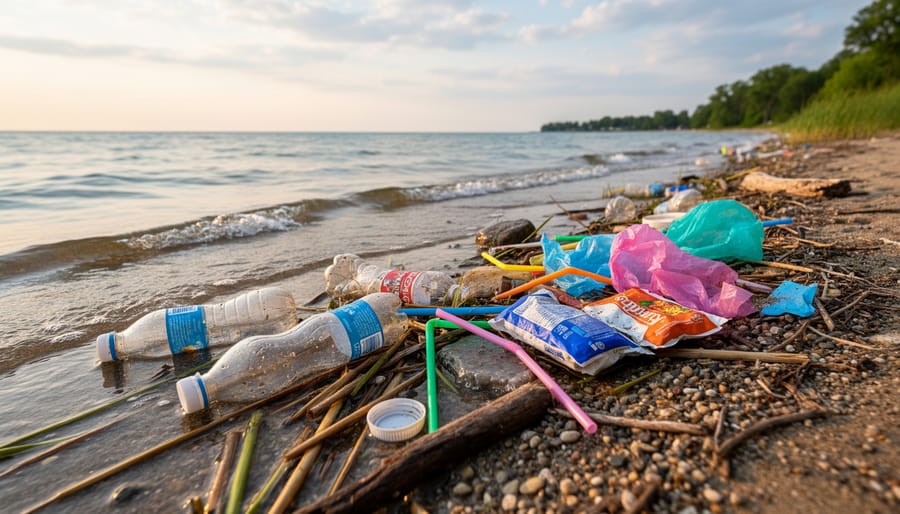
Plastics don’t stay inert once they enter our environment. When PS (#6) foam breaks apart in waterways, it releases styrene compounds that accumulate in fish tissue. The Detroit River monitoring program detected microplastic concentrations of 12,000 particles per cubic meter in 2025, many carrying absorbed toxins like PCBs and heavy metals. Lake Michigan beaches now show measurable plastic fragments in 90% of sediment samples, with each plastic type contributing different chemical signatures depending on how contamination happens during breakdown.
Microplastic Generation
Larger plastic items fragment into microplastics through UV exposure, wave action, and temperature cycles. A single LDPE bag (#4) can break into thousands of particles over several years in Great Lakes waters. These fragments carry their original additives, phthalates from PVC, flame retardants from electronics housings, directly into the food chain. University of Michigan researchers found microplastics in 100% of Lake Erie water samples, with the highest concentrations near urban outfalls.
Proper identification stops this cascade. When you correctly sort a PS container for landfill instead of recycling, you prevent facility contamination. When you choose HDPE (#2) over PVC (#3), you reduce chemical leaching risks before disposal even happens.
Taking Action: What Michigan Residents Can Do
Knowing your plastics matters most when you act on that knowledge. Start by checking your local municipality’s recycling guidelines, what’s accepted in Grand Rapids differs from Detroit’s program, and contaminating bins with wrong materials undermines the entire system. Most Michigan communities accept #1 and #2 plastics reliably, while #3 through #7 require verification with your hauler.
Create a simple home sorting station with clearly labeled bins. Before tossing items, spend five seconds checking the RIC code and ensuring containers are empty and dry. That yogurt residue in your #5 container can contaminate an entire bale of recyclables. When you can’t find a code, default to trash rather than wishful recycling, contamination costs Michigan recycling facilities millions annually.
Better yet, reduce plastic use entirely. Choose reusable bags, refillable water bottles, and bulk foods in your own containers. Detroit’s recycling education programs now teach residents which plastics break down into microplastic contamination fastest, helping shoppers make smarter purchasing decisions. Ann Arbor’s zero-waste initiatives connect residents with refill stations and package-free shops throughout Washtenaw County.
Michigan’s 2026 Extended Producer Responsibility legislation shifts accountability to manufacturers, but individual choices still drive change. Support businesses using mono-material packaging that’s easier to recycle. When you must use plastic, favor #2 and #5 over #6 foam or mixed #7 materials.
Share what you learn. Teaching one neighbor or family member to properly identify plastics doubles your impact. When communities understand the connection between correct sorting and cleaner Great Lakes water, collective behavior shifts. Your identification skills directly prevent plastic pollution from reaching the ecosystems we all depend on.
Common Questions About Identifying Plastics
What should I do with plastics that have no resin code?
When you can’t find a number, check with your local recycling program’s guidelines first. Many Michigan facilities prefer you place unmarked rigid plastics in the trash rather than contaminate their sorting systems with unknown materials.
Why won’t my recycling center accept black plastic containers?
Black plastic contains carbon black pigment that absorbs infrared light, making it invisible to the optical sorting equipment most Michigan facilities use. Even if the container shows a recyclable number, the machinery can’t detect and sort it properly.
Are biodegradable and compostable plastics actually better?
Not necessarily. Most require industrial composting facilities that don’t exist widely in Michigan, and they contaminate regular recycling streams just like conventional plastics. They also break down into microplastics in natural environments like the Great Lakes.
Can I recycle items made from multiple types of plastic?
Generally no. Coffee pods, squeeze pouches, and multilayer packaging combine different plastics that can’t be separated, making them unrecyclable in standard Michigan programs. These belong in the trash despite sometimes showing recycling symbols.
What if my city’s recycling rules differ from the plastic numbers?
Always follow your local program’s guidelines over the RIC symbol. Detroit, for example, only accepts #1 and #2 bottles and jugs, even though other numbered plastics are technically recyclable elsewhere.
When should I skip recycling altogether?
Food-contaminated plastics, items smaller than a credit card, and thin plastic films rarely get processed successfully. Rinsing helps, but heavily soiled containers waste water and energy, sometimes choosing reusable alternatives or supporting clean energy solutions makes more environmental sense than struggling with contaminated recyclables.
These situations come up constantly for Michigan residents trying to do the right thing. The confusion isn’t your fault, plastic identification was designed for industry, not consumers sorting items at home. When you’re genuinely unsure about an item, a quick call to your municipality’s waste management department saves more contamination headaches than guessing. Most Michigan cities now have recycling hotlines or apps that clarify local rules, taking the mystery out of what belongs in your bin.
Learning to identify plastics isn’t just about memorizing numbers on containers. It’s about making choices that keep Michigan’s rivers cleaner and our recycling systems working efficiently. Every correctly sorted bottle or properly disposed foam cup prevents contamination that would otherwise ripple through our local environment.
You don’t need to become an expert overnight. Start by checking the recycling guidelines for your specific Michigan community, since acceptance varies between Detroit, Grand Rapids, Ann Arbor, and smaller towns. Learn the codes on the products you use most often. Share what you discover with family members, neighbors, or coworkers who might be unknowingly contaminating their recycling bins.
Across Michigan, communities are proving that informed residents create measurable change. Detroit’s expanded recycling education has reduced contamination rates. Ann Arbor’s zero-waste initiatives show what’s possible when people understand what they’re handling. State programs launched in 2026 build on this momentum, but they rely on individuals who take the time to look at that small number stamped on the bottom of their plastic cup.
Your knowledge matters. When you correctly identify and sort plastics, you’re not just following rules, you’re protecting the Great Lakes, supporting local recycling workers, and contributing to a system that actually works.